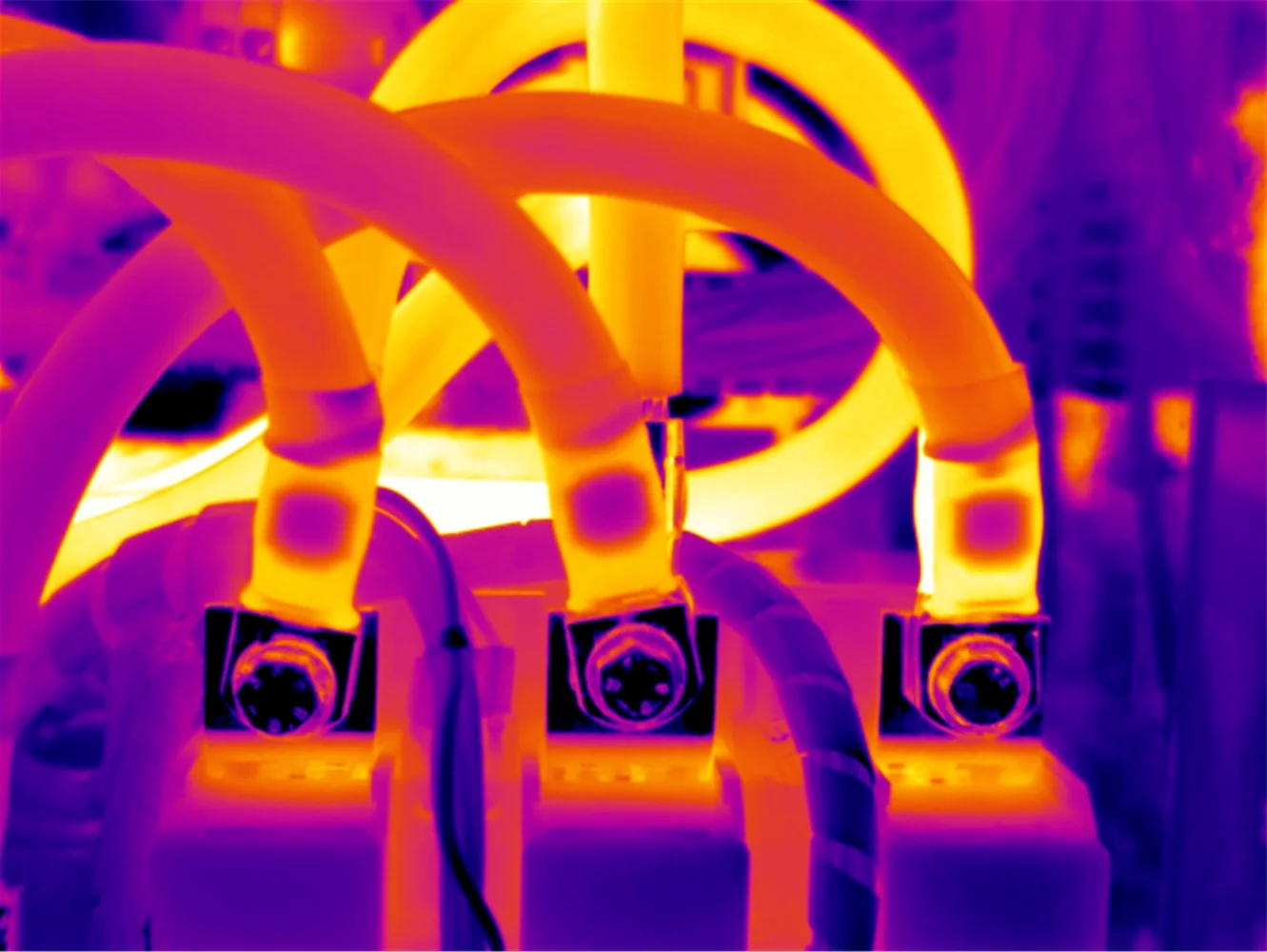
Electrical thermography uses infrared imaging to examine thermal patterns associated with electrical equipment. Its value is not the dramatic color of the picture. It is the additional information that a qualified person can interpret alongside the equipment, its operating conditions and other relevant evidence. For an owner or maintenance team, understanding that distinction makes an inspection easier to commission and its findings easier to use.
This guide explains the technique, its limitations and the questions worth asking before an inspection. It is an introduction for clients, not instructions for opening or working on energized equipment. The examples are hypothetical and do not describe a PYCEM project or an actual diagnosis.
What electrical thermography can reveal
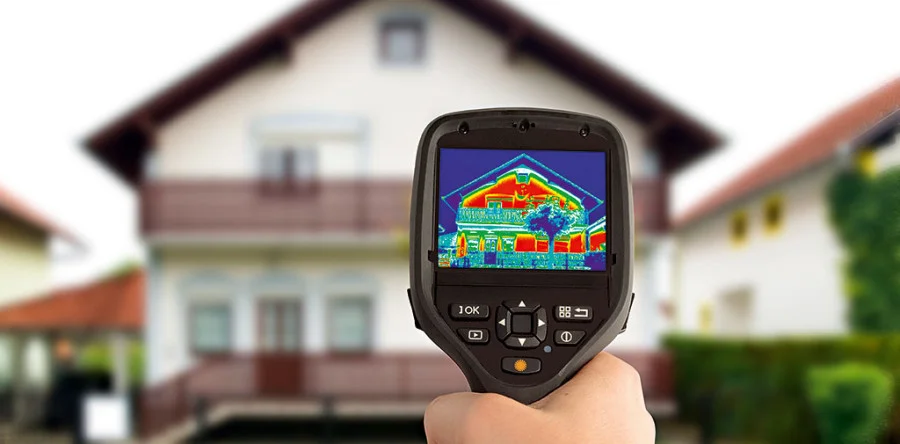
A thermal camera detects infrared radiation and displays a representation of the observed scene. In a temperature-measurement application, the displayed values depend on the instrument and the measurement conditions. Surface properties and reflected radiation matter. The camera does not directly read the internal condition of every component simply because that component appears in the frame.
FLIR’s temperature-measurement documentation highlights the importance of image quality, focus, resolution and measurement parameters. For a client, the practical implication is straightforward: a clear-looking image and a precise-looking number are not enough on their own. The inspection needs an appropriate method and an interpretation that recognizes the limits of the observation.
Reading a thermal image without overreading it
Colors are a way of presenting the image. A bright or red region should not automatically be interpreted as dangerous, and a dark region should not automatically be interpreted as satisfactory. The scale and the relationship between the observed areas must be understood. Changing the presentation can change how striking a pattern looks without changing the underlying equipment.
Emissivity describes how a surface emits thermal radiation relative to a reference. Reflective surfaces can make interpretation more difficult because radiation from the surroundings can influence the observation. FLIR’s explanation of emissivity discusses this distinction. The useful lesson is not to apply a generic correction yourself, but to recognize why material and surface condition belong in a professional interpretation.
A thermal camera also does not see through an ordinary wall or opaque equipment enclosure in the way an X-ray image might suggest. It observes the accessible surface; any inference about something behind it has limitations. FLIR addresses this common misunderstanding in its guide to what thermal imaging can and cannot see.
For example, a client may receive an image showing a different pattern on one area of an enclosure. The useful question is what was observed, under which conditions and what further evaluation is needed. Jumping directly from that image to a specific hidden failure bypasses the interpretation step. A careful report should preserve the distinction between the recorded observation and an explanation that remains to be confirmed.
It is also worth asking what could not be inspected. The absence of a reported anomaly can have several meanings: no unusual pattern was observed in the reviewed area, the operating conditions were not representative, or an area was inaccessible. Those situations should not be collapsed into the same reassuring statement. A report becomes more useful when its boundaries are visible.
Applications in homes, businesses and industrial settings
The technique can contribute to evaluation of electrical equipment in different kinds of property. The objective might be to examine a reported concern, add information to a maintenance review or create a record for an agreed comparison. The appropriate scope depends on the assets, access, operating conditions and question being investigated.
A residence, an office and an industrial facility have different patterns of use. An observation made during one operating condition should not be assumed to describe every other condition. As FLIR notes in its discussion of inspection mistakes, electrical equipment can become warm during normal use; the presence of a hot area is not automatically evidence of a problem.
Anomalies that need evaluation
An observation becomes meaningful when it is connected with a specific asset and reviewed in context. Possible explanations should remain possible explanations until there is enough evidence for a conclusion. The table below illustrates the kinds of questions a client can ask; it is not a diagnostic chart.
| Observation | A useful question | Important limitation |
|---|---|---|
| One area appears different from nearby areas | Are the surfaces and operating conditions meaningfully comparable? | A visual difference alone does not establish a fault |
| A pattern differs from an earlier inspection | What changed in operation, access or measurement conditions? | Images from different conditions may not support a direct comparison |
| Part of an installation is not visible | What was outside the inspected scope? | An unobserved area has not been assessed by that image |
Consider a hypothetical commercial property with several occupied spaces. The manager wants to understand a concern related to selected electrical equipment. Before an inspection, the manager identifies the assets, available records and the people who can explain operating conditions. Access is planned by appropriately qualified personnel; the manager does not remove covers or arrange unsafe access to obtain a better picture.
During the assessment, an unusual pattern is recorded. The report identifies the equipment and the context, describes the observation and states any limitations. The manager receives a recommendation for further evaluation rather than an unsupported claim that the image alone proves a specific internal defect. A responsible person then determines the next action using the full situation, not only the colors on the screen.
If work is later performed, follow-up can be discussed as a separate step. The purpose may be to document a new observation under stated conditions. It should not be treated as an automatic certificate that every aspect of the installation is safe. The example demonstrates a decision process, not a universal inspection procedure or guaranteed outcome.
Thermography may support maintenance, but it does not replace all other observations, tests or professional judgment. The appropriate combination depends on the installation and the assignment. A client should ask how the proposed inspection fits the broader maintenance question, instead of assuming that one technology can answer every concern at once.
Preparing an inspection and using the findings
Start with a short description of the decision you need to make. Identify the property, the equipment or area involved and why the inspection is being considered. If there are previous reports, provide their dates and explain whether anything has changed. Make clear which information is known and which is uncertain. That helps the inspection team define an appropriate scope.
Operating conditions should be considered as part of that scope. FLIR’s discussion of electrical load and heat illustrates why the relationship matters. This does not mean the client should deliberately alter loads or operate equipment to produce a pattern. Those decisions belong to the qualified people responsible for planning and performing the assessment safely.
Limitations and a useful inspection record
An image should be traceable to the asset it represents. A useful record can connect the thermal observation with a location, date, description and relevant conditions. It should distinguish what was inspected from what was excluded or inaccessible. FLIR’s guidance on documenting findings emphasizes recording comparisons and operating information. Any standard applicable to an actual project needs its own current, contextual review.
When commissioning the work, agree what will be delivered. A brief discussion, an image set and a structured report are different outputs. Ask how the findings will be explained to the people who must act on them. The most useful format is the one that lets the intended recipient identify the equipment, understand the observation and see what follow-up has been recommended.
A practical list of questions includes:
- Which assets and areas are included in the inspection?
- What access and operating information must be coordinated?
- What conditions could limit the assessment or require another visit?
- How will images and observations be identified in the record?
- How will possible explanations be distinguished from confirmed conclusions?
- Who will review recommendations and decide on follow-up?
- What information should be retained for a future comparison?
Imagine the hypothetical property manager receives three observations and one access limitation. A useful internal follow-up list might assign an owner to each item, retain the report reference and record the next action. The access limitation remains an open information gap rather than disappearing from the list. If an item is resolved, the record identifies what was done and which evidence supports closing it.
This organizational step is simple but important. A technically detailed report can lose value if no one is responsible for reviewing it. Conversely, a clear record can help the team ask better questions even when some conclusions remain pending. The inspection is part of an information-and-decision process, not just the delivery of photographs.
Can thermography find every electrical problem? No. Some conditions may not produce a visible pattern during the observation, and others may be outside the accessible scope. The method has limits and should be selected for an appropriate purpose.
Can a normal-looking image prove an installation is safe? No. It describes an observation under particular conditions. Overall safety or condition requires the appropriate assessment of the installation, not a conclusion drawn from one image.
Does non-contact mean no electrical hazard? No. The environment may still contain serious hazards. Access and work must be planned by qualified personnel. Property owners should not open or manipulate energized equipment to assist the inspection.
How often should an inspection be repeated? There is no universal schedule suitable for every property. The equipment, operating context, maintenance program, applicable requirements and professional assessment should inform the decision. Avoid adopting a generic website interval as a substitute for that review.
For a project in San Diego, PYCEM’s thermography service provides a starting point for discussing an infrared inspection. Share the property location, the concern and the information already available. A well-defined question helps establish a useful scope and a clearer next step after the observations have been reviewed.